
By Deeyoung MaLinkedInWebsiteAugust 17, 202613 min readRestaurant OperationsReviewed August 21, 2026
Restaurant Supplier Delivery Late or Short: A Pre-Service Decision Plan
When a restaurant supplier delivery is late or short, confirm the state, protect menu promises, reassign work, and preserve a useful incident record.
Key takeaways
- Confirm whether the order is late, short, substituted, or missing an ETA. Those states create different decisions.
- Protect the guest promise before changing labour: close unsupported menu channels, identify approved alternatives, and assign the remaining prep and receiving work.
- A late truck does not prove a food-safety failure. When it arrives, run the normal receiving check without skipping temperature, condition, identity, or allergen review.
- Record the scheduled window, supplier update, missing items, service changes, staff changes, final receipt, credit, and follow-up so one bad morning can be separated from a pattern.
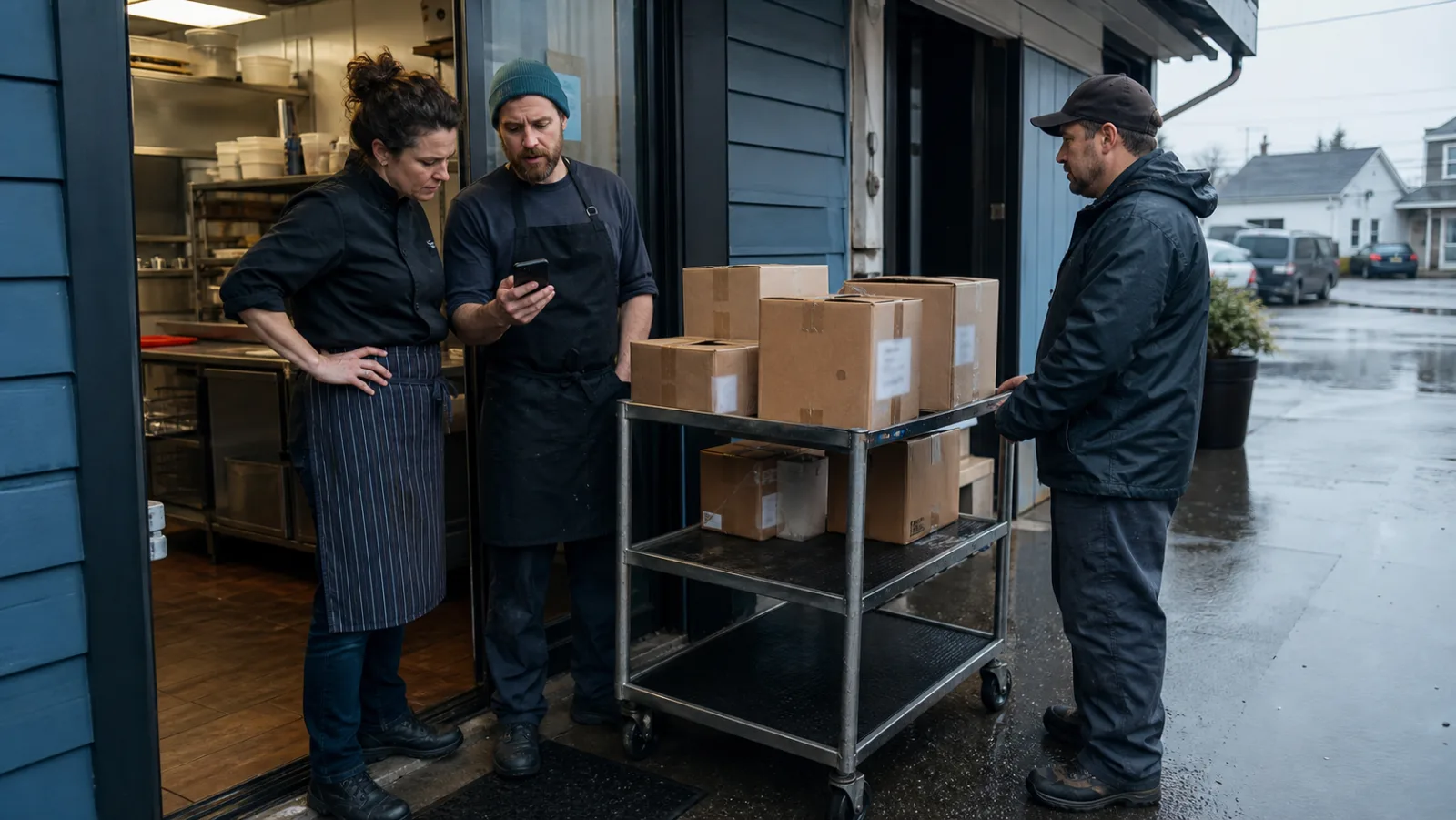
A restaurant supplier delivery that is late or short creates a deadline before it creates a receiving problem. The manager needs to know what will be missing at service, which promises must close, and which jobs still exist even if the truck never arrives.
Do not treat “late,” “short,” “substituted,” and “no reliable ETA” as the same status. A truck running 25 minutes behind may only change receiving coverage. A confirmed short shipment can remove a dish. An unapproved substitute can change allergens, cost, yield, and prep. No ETA forces a service plan that does not depend on the order. This guide covers that pre-service decision. It does not replace the supplier agreement, food-safety plan, purchasing authority, or provincial requirements.
Four clocks are running before the truck reaches the door
| Clock | Question | Decision point |
|---|---|---|
| Supplier | What is the last confirmed ETA and fill status? | When the restaurant stops planning around an uncertain promise |
| Prep | How much usable production time remains after receipt and inspection? | When an item can no longer be prepared consistently for opening |
| Menu | Which in-house, online, catering, or delivery orders still depend on the item? | When the restaurant closes or narrows the promise |
| People | Which receiving, prep, floor, and communication tasks remain? | When roles change after the service state is chosen |
Set those times while the information is still incomplete. Waiting for one more supplier update can consume the last safe prep window. Cutting a prep cook immediately can leave nobody available to receive, inspect, store, relabel the menu, and rebuild a smaller service.
One short shipment changes three parts of lunch
At 9:55 a.m., a fictional Halifax restaurant expects chilled salmon, cream, and takeout bowls. Lunch opens at 11:30. The supplier confirms that the salmon was shorted, the cream truck is about 30 minutes late, and the bowls are unavailable. Those are three different problems, so the manager does not announce that “the delivery failed.”
- Salmon: the kitchen closes the salmon dish before prep and checks whether a previously approved fish option is available. No replacement is promised until ingredients and allergens are reconfirmed.
- Cream: the kitchen uses approved stock already on hand. A trained receiver remains assigned for the later arrival and normal inspection.
- Takeout bowls: the floor lead checks approved packaging and pauses only the channels or items that cannot be packed safely and consistently.
By 10:10, the restaurant has a smaller but honest menu. Nobody is driving across town for an ingredient without approval, the supplier contact remains with one person, and the opening team knows what work still matters.

Do not cut the roster before recounting the work
A missing ingredient can reduce one prep task and create five others: supplier contact, alternate prep, allergen verification, channel updates, and late receiving. Count by role and time window, not by the number of menu items removed.
Start with reversible changes. Move a prep cook to the confirmed menu. Keep one trained receiver available inside a defined window. Give the floor lead ownership of the POS, website, and delivery channels. If the final service state has less work after that recount, apply the restaurant policy and the employment requirements for the province before shortening a shift. The delivery delay itself is not the legal or payroll answer.
An unapproved substitute is a new decision, not a favour
A substitute can change ingredients, priority allergens, pack size, cooking behaviour, portion yield, shelf life, price, and guest wording. The authorized buyer or food-safety role should compare the new item with the approved specification before it enters prep. The driver can identify what was sent; the driver should not have to approve the restaurant recipe.
CFIA guidance says incoming ingredients should match the purchase order and specifications, be properly identified, arrive in suitable packages, and be checked for the required condition and temperature. The guidance was written for businesses regulated under the Safe Food for Canadians Regulations, so its legal applicability depends on the restaurant’s activities. The control idea remains sound: verify the actual product before using it.
For a prepackaged substitute, read the full current ingredient and allergen information. CFIA’s labelling guidance explains how priority allergens, gluten sources, and added sulphites are declared on applicable prepackaged foods. A familiar product name or verbal “same thing” does not replace the label and the restaurant’s allergen procedure.
When the truck arrives, the incident changes owners
The pre-service plan does not authorize a rushed receipt. The trained receiver still checks supplier identity, item and count, package condition, temperature where required, dates, substitutions, and the purchase record. If a chilled item arrives with a high reading, move to the accept, hold, or reject workflow instead of using the delayed schedule as evidence that the food is acceptable.
Health Canada advises keeping cold food at or below 4°C and hot food at or above 60°C as national safety context. The applicable commercial standard, product specification, exposure history, provincial rule, and approved plan still control the decision. Late arrival is an operational fact. Safety has to be checked when the product is present.
Keep one incident record, not a trail of chat messages
The record needs the scheduled window, first missed time, each supplier update, confirmed short items, proposed substitutions, decision cutoff, menu and channel changes, assigned receiver, actual arrival, quantities accepted or rejected, credit or replacement status, staff changes, and final owner. Link the purchase order, invoice, receiving record, and service note instead of copying private chat fragments into several systems.
Review a supplier only after the definitions are stable. Arrival within the agreed window, fill quantity, unapproved substitution, rejected quantity, unresolved credit, and emergency purchase are separate fields. A useful monthly review has a denominator: four late arrivals out of 18 deliveries says more than “this supplier is always late.” One current Reddit thread can reveal the language operators use, but it cannot establish the rate for your restaurant.
Use one card to separate the staffing decision from the supplier decision
The bilingual staffing adjustment card starts with the incident state, service promise, and work that disappeared, moved, or was added. It then records coverage that must remain, an approved shift change, actual time worked, the handoff owner, and the next review. Receiving, allergen, food-safety, and purchasing decisions stay in a visibly separate escalation block.
Complete the incident record before opening the product. Use the receiving and rejection SOP for the physical delivery and the sold-out-item workflow for a changed menu promise. Then update the week in the restaurant schedule maker, verify actual time in the employee hours calculator, and carry the reviewed figures into the weekly payroll handoff.
Maxuod Shift holds the changed week, not the purchase order
Use Maxuod Shift to preserve the approved roster, change role coverage, record the actual time worked, and leave a factual handoff note for the next manager. If a receiver stays 35 minutes later or a prep role moves to the floor, that operating change remains visible beside the week that payroll will review.
Maxuod Shift does not place the order, approve a supplier, inspect food, verify allergens, maintain inventory, negotiate a credit, or decide whether to shorten a shift. Keep those decisions in the systems and procedures that own them. The schedule should explain who did the extra work and when, without pretending to be the supplier or food-safety record.
Set the next decision before the next delivery window
Close the incident with one change that can be checked. Move the delivery cutoff earlier for a high-volume Friday, preapprove one substitute, add a second receiving role for a narrow window, revise a packaging fallback, or require the supplier to confirm shorts before the truck leaves the depot. Do not change every par and supplier term because one truck was late.
The next review should answer two questions: did the service plan protect the guest promise, and did the supplier record close the shortage? If either answer is missing, the restaurant still has a handoff problem even after the shelves are full again.
FAQ
What should a restaurant do first when a supplier delivery is late?
Confirm the last reliable ETA and the exact items at risk. Then set a decision time before service, protect unsupported menu channels, assign approved substitute decisions, and keep someone available to receive the truck without abandoning prep.
Should a restaurant cut staff when a food delivery is delayed?
Not from the delay alone. First recalculate the work that remains: alternate prep, menu updates, supplier contact, receiving, guest communication, and cleanup. Change staffing only after the operating state is chosen and the applicable policy or employment rule is reviewed.
Can a restaurant accept an unapproved substitute from a supplier?
The buyer or other authorized role should verify the item, specification, ingredients, allergen information, pack size, yield, price, and receiving condition before approval. A driver should not have to make that menu or allergen decision at the door.
Does Maxuod Shift manage purchase orders or supplier credits?
No. Maxuod Shift can preserve role coverage, schedule changes, actual hours, and a factual handoff note. Purchase orders, food-safety acceptance, inventory, credits, supplier contracts, and allergen approval remain in their own systems and procedures.
Official sources checked
Reviewed August 17, 2026
- CFIA: Incoming ingredients, materials and non-food chemicalsCanada; guidance for regulated parties whose applicability depends on the activity
- Health Canada: General food safety tipsCanada
- CFIA: List of ingredients and allergens on food labelsCanada; prepackaged-food labelling requirements
Written as an operator checklist, not legal or payroll advice. Confirm local rules before changing pay, holiday, or tip policies.
Related guides
Restaurant Food Delivery Temperature Too High: Hold or Reject?
Food delivery temperature too high? Isolate the lot, verify the reading, document the evidence, and decide who can accept, hold, or reject it.
Restaurant Ran Out of a Menu Item During Service: A 15-Minute Response
Use a practical 15-minute restaurant sold-out-item response to stop new orders, brief staff, offer substitutes, record waste, and reset tomorrow’s prep.
Restaurant Shift Handoff Checklist: Pass the Exceptions
A restaurant shift handoff checklist for exceptions, owners, deadlines, actual-hour changes, and close-to-open decisions without a chat dump.
Build the schedule before the week gets loud
Maxuod Shift keeps employee availability, overtime risk, payroll estimates, and tip distribution in the same place for small restaurant teams.