
By Deeyoung MaLinkedInWebsiteSeptember 24, 20269 min readRestaurant OperationsReviewed September 24, 2026
Your restaurant changed a procedure. The old copy is still in use.
Roll out a changed restaurant procedure across shifts: replace old instructions, brief returning staff, check the changed step, and record exceptions.
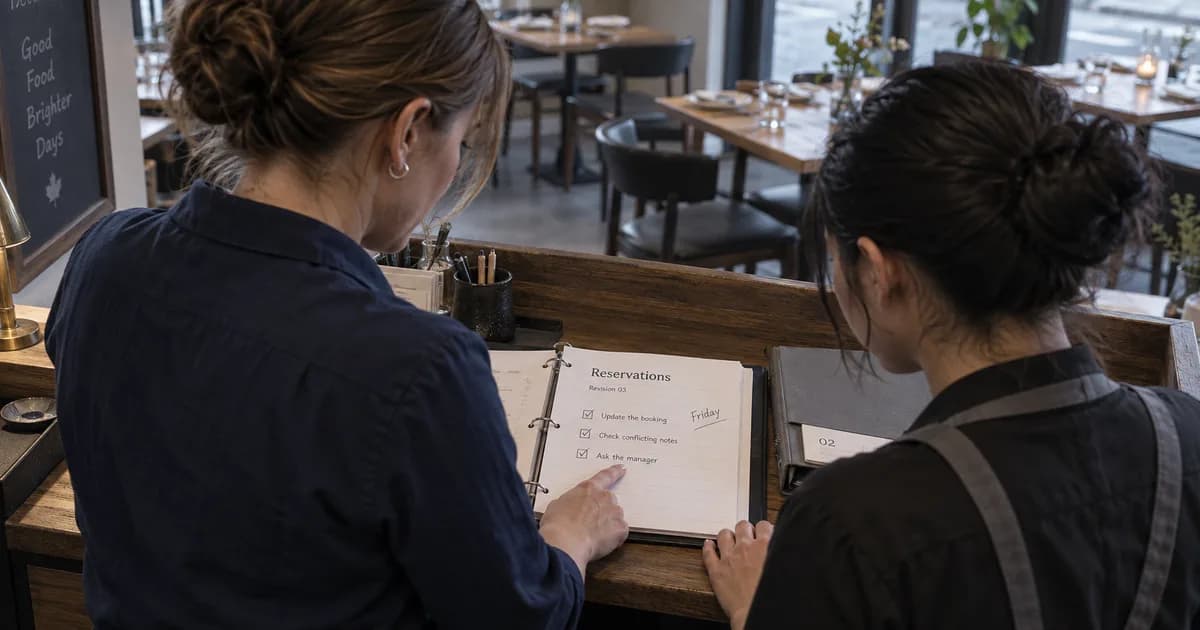
In this fictional example, a restaurant changes how hosts record reservation amendments. The weekday team updates the booking record directly. On Saturday, a returning host follows the instruction inside the desk binder: write the change on a separate slip for the manager. Both employees believe they followed the procedure.
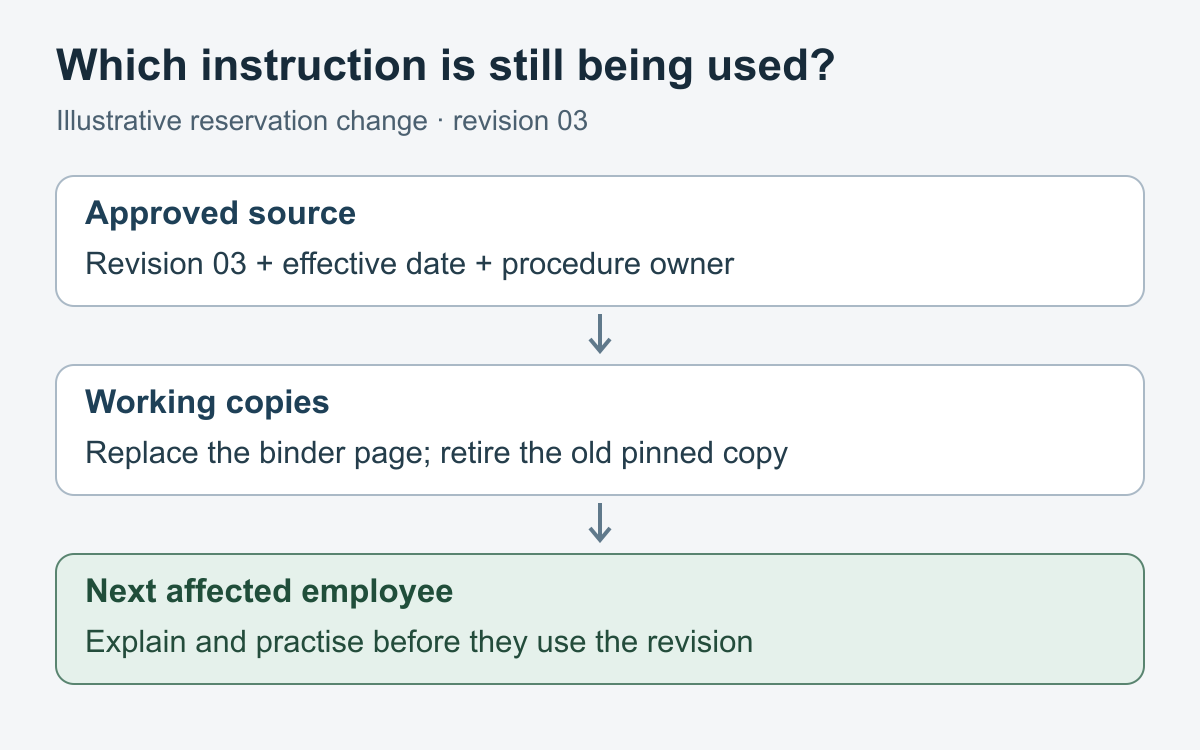
To roll out a restaurant SOP change across shifts, give staff one approved version with an effective date, remove superseded instructions from use, and arrange a demonstration before each affected person performs the changed work. A group message can announce the change. It cannot establish which instruction someone will follow at the desk.
We would start by tracing the two instructions, before treating the mismatch as an employee performance problem. The goal is a narrow one: everyone carrying out this particular job can find and use the active method.
Find the copy that taught the old method
Ask the returning host to show you the instruction they used. Compare it with the manager’s approved revision. Check the physical binder, pinned message and shared document rather than assuming the newest file has reached all three places.
In the example, the manager updated a document on Wednesday but never replaced the printed page. The Saturday host was absent from the briefing and had no reason to know that the binder was out of date. Sending the same announcement again leaves both problems unresolved.
Name the active version and replace the obsolete working copy. Keep the earlier version in the appropriate restricted archive, clearly marked as superseded, rather than leaving it beside the current instruction. If someone has saved a photo of the old page for work, explain where to retrieve the active instruction instead. Personal-phone use should follow the restaurant’s policy; this is not a reason to inspect staff phones.
Do not overwrite an incident record or other evidence to make the history look tidy. Retiring an instruction from use is different from erasing what happened under it.
Write the difference an employee needs to act on
The restaurant does not need a new operations manual to change one reservation step. It needs a revision that makes the difference visible. Define a standard operating procedure (SOP) as the agreed method for this job, then describe the small part being replaced.
For our fictional reservation change, the manager’s revision note reads:
Reservation amendments, revision 03. Effective from Friday’s opening shift. Enter an amendment in the existing booking record instead of creating a separate slip. Ask the manager to resolve conflicting entries before confirming the change to the guest. Existing approval rules for party size and seating remain unchanged. The host-desk binder and the shared training copy must both show revision 03. The restaurant manager owns corrections to this instruction.
The booking record here is the restaurant’s chosen reservation system, not Maxuod Shift. The note does not grant hosts new approval powers or prescribe how a particular booking platform works.
Show what stays unchanged as well as what changes. Otherwise, an employee may reasonably infer that a new recording method also changes who can approve an amendment. Keep the full instruction accessible at the workstation. An announcement should point to that source, rather than reproducing another copy that will need separate maintenance.
A spelling correction may need only a corrected document. A changed action needs an explanation. Changes affecting safety, pay, contractual terms or protected rights need the appropriate specialist review; a revision number and staff signature do not supply that authority.
Use the roster to find the people Wednesday’s briefing missed
The list of people who attended the announcement is only a starting point. Compare it with the employees who will perform the revised task over the coming shifts. Include weekend-only staff, replacements and people returning after an absence. A cook who never handles reservations does not need the same instruction as a host covering the desk on Sunday.
In Maxuod Shift, a manager can use the saved weekly schedule and employee roles to find the affected service windows and plan the instructor’s coverage. On a separate training record, note who still needs the explanation, who will give it and when it will happen before the changed task is assigned. Keep that record with the restaurant’s authorised training documents.
This distinction matters when a replacement is arranged after the briefing. A name added to the schedule does not mean that person has learned revision 03. The shift lead needs to check before leaving the replacement at the desk. If the explanation cannot be completed yet, arrange appropriate supervision or reassign the task.
Maxuod Shift does not manage SOP versions, certify training, collect authoritative read receipts or prove task completion. A small team may need only its existing schedule plus a controlled instruction and training record. If detailed assessments or training evidence are required, use a system designed for that work.
Open the weekly shift scheduler to identify the next affected shift. Keep individual learning observations, employment disputes and private information out of shared schedule notes. Maxuod Shift is developed in Halifax for small Canadian teams; the restaurant remains responsible for its procedure and staffing decisions.
Rehearse the step that changed
Use a prepared training example, not a live guest reservation. Show an amendment in the chosen record, then ask the employee to handle a second example where the notes conflict. The useful observation is whether they update the intended record and stop at the manager-approval boundary.
If the employee creates a fresh slip, return to the instruction together. It may still be unclear, or the old paper may still be within reach. Repeat the changed step after resolving the cause. Do not mark the rollout complete because everyone nodded during the explanation.
The Canadian Centre for Occupational Health and Safety’s job-design guidance supports training when introducing new procedures, time to adjust and feedback from the people doing the work. That is guidance for organising work, not a restaurant-specific legal sign-off or a prescribed SOP form. Our version-and-recipient check is an editorial recommendation built around that practical problem.
Record what you observed with ordinary words: explanation given, practice completed, question still open. A message reaction or signature records a different event. Do not use either as proof of competence, consent to changed employment terms or a waiver of rights.
Give the briefing a place in the working day
A short instruction still takes time to explain, practise and question. Arrange coverage so the instructor can pause without abandoning the host desk. Record the time actually spent; a planned slot is not evidence that the activity happened or that it took exactly that long.
For Québec workplaces, CNESST’s worker-training guidance identifies changed working methods as a training situation and states that employer-required training and meeting hours must be paid, regardless of where the training takes place. Do not turn mandatory reading at home into supposedly unpaid work because the document is short.
That source addresses Québec. For a restaurant elsewhere in Canada, verify the applicable provincial or territorial rules and any relevant agreement before deciding how training time is treated. This article supplies neither a national payroll formula nor an exemption. Have the responsible payroll reviewer assess the recorded time with the rest of the employee’s work.
A workaround needs an owner and an end
Suppose the booking system becomes unavailable during the first weekend using revision 03. The manager follows the restaurant’s approved outage procedure and records the temporary method, who authorised it and the condition for returning to normal work. Staff should not quietly revive the old loose-slip habit because it feels familiar.
For a routine service-method change, a useful exception note states the obstacle, the authorised temporary response and the next decision. It should make clear whether the problem is missing equipment, ambiguous wording, access to the record or a need for further instruction. “The new procedure doesn’t work” is too broad to correct.
The temporary response does not automatically become revision 04. The procedure owner reviews it before changing the active instruction. If the issue involves a hazard, allergen control, cleaning chemicals or food storage, follow the applicable safety instructions and qualified authority’s direction. Do not trial an improvised method during service or assume the previous method is safe to restore.
Pass the unresolved decision to the next manager using the restaurant shift handoff checklist. The handoff tells that manager what remains open. The procedure record tells them which instruction is currently approved. Those records have different jobs.
Close the change after the last affected shift, not the first announcement
Return to the Saturday host in the example. They can now find revision 03, have practised the changed step and know where to take a conflicting entry. The outdated binder page has been retired. Sunday’s replacement still needs the same preparation before working at the desk, so the rollout remains open with an assigned next action.
Use those conditions to judge completion. Active copies agree; affected employees have received the necessary instruction before use; unresolved exceptions have an owner and a decision or review point. This is a management check, not a certificate that the procedure is lawful, safe or permanently effective.
Listen when people explain why they returned to the old method. If the active record is inaccessible from the desk, another reminder will not fix access. Correct the working condition, then revise the instruction if needed. A successful demonstration on Friday is not a reason to ignore a problem on Sunday.
Before announcing your next change, pick up the instruction a returning employee would find at the workstation. Start there.
Sources checked September 24, 2026. The reservation scenario is fictional. This article offers an operating method, not legal, payroll or food-safety advice. Check the requirements, agreements and approved procedures that apply to your restaurant. No time savings, customer results or compliance outcome is claimed.
Official sources checked
Reviewed September 24, 2026
- CNESST — Formation des travailleursQuébec only
- CCOHS — Job DesignCanada; occupational-health guidance, not a restaurant-specific legal requirement
Written as an operator checklist, not legal or payroll advice. Confirm local rules before changing pay, holiday, or tip policies.
Related guides
Restaurant Shift Handoff Checklist: Pass the Exceptions
A restaurant shift handoff checklist for exceptions, owners, deadlines, actual-hour changes, and close-to-open decisions without a chat dump.
Your Certified Food Handler Calls Out. Can the Restaurant Still Open?
Compare food-handler certificate coverage across all 13 Canadian jurisdictions and decide what to verify before replacing a trained worker or opening a shift.
A Boil-Water Advisory Hits During Service. Can the Restaurant Stay Open?
Use a restaurant boil-water advisory decision check for ice, drinks, food preparation, handwashing, dishwashing, staffing, and safe restart.
Build the schedule before the week gets loud
Maxuod Shift keeps employee availability, overtime risk, payroll estimates, and tip distribution in the same place for small restaurant teams.