
By Deeyoung MaLinkedInWebsiteJuly 19, 202610 min readRestaurant OperationsReviewed July 19, 2026
Restaurant Freezer Power Outage: Protect Food Before You Rebuild the Shift
Use a restaurant outage checklist to keep doors closed, log time and temperature, isolate affected food, contact the right authority, and rebuild coverage.
Key takeaways
- Keep refrigeration doors closed and record outage start time before repeatedly checking food.
- Use calibrated temperature readings and local public-health guidance; appearance and smell are not sufficient.
- Separate food-safety disposition from staffing and financial decisions.
- Document time, temperature, authority contacted, food disposition, and cleaning or restart steps.
When refrigeration loses power, opening every door to “see if it is still cold” spends the cold you still have. Start with containment and a clock. Keep doors closed, identify the affected circuits or units, record when normal operation was last confirmed, and assign one incident lead.
Food-safety thresholds and authority contacts vary by province and circumstance. This checklist helps organize the response; it does not decide whether a specific food is safe.
First ten minutes: contain and document
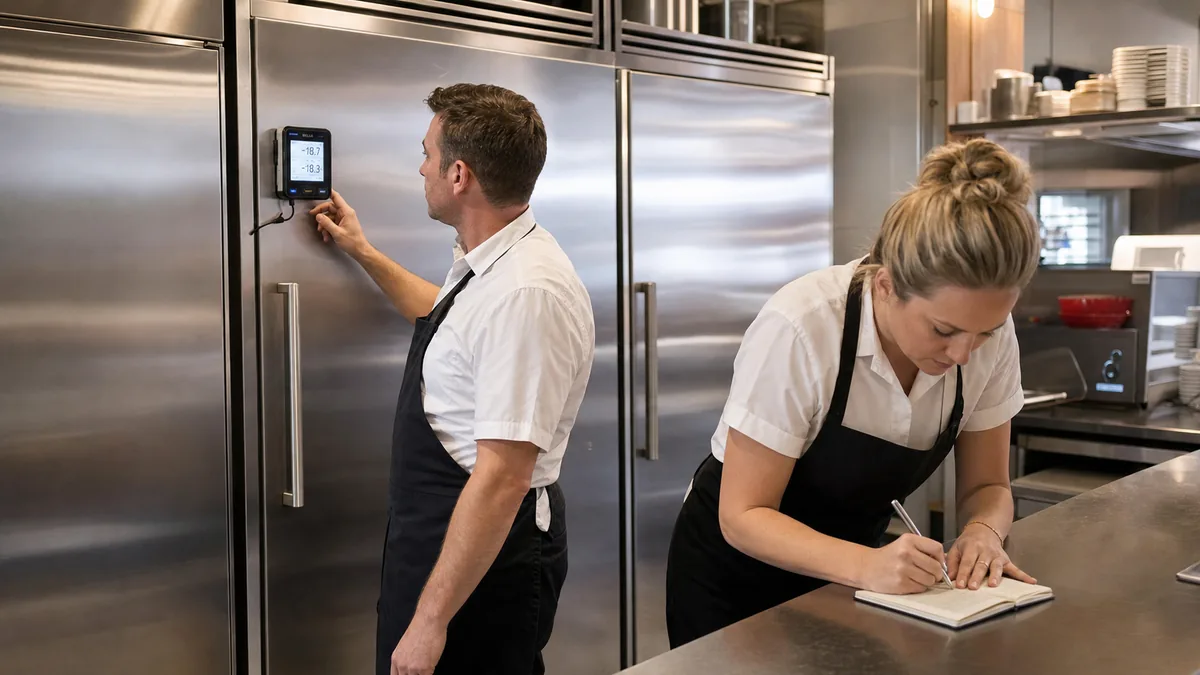
Stop staff from repeatedly opening doors. Mark affected units, confirm whether the outage is building-wide or equipment-specific, and record the time discovered. Use an external display or one controlled temperature check where safe and permitted.
- Incident lead: owns the log and calls the local food-safety authority or licensed service provider.
- Kitchen lead: stops use of affected ingredients and isolates questionable food.
- Floor lead: removes unavailable items from ordering channels and manages guests.
- Facilities contact: checks power, alarms, and equipment without bypassing safety controls.
Build a time-and-temperature record
Record each unit, product group, last known normal time, outage discovery time, measured temperature, method or device, door status, and next reading. Do not infer safety from smell, appearance, or one warm surface reading.
Nova Scotia publishes an official power-outage food-safety factsheet. Quebec and New Brunswick publish their own emergency food guidance. Use the province responsible for the establishment and contact the authority when the facts are uncertain.
Follow one outage without spending the cold
At 2:40 p.m., a Halifax restaurant loses power to two walk-in circuits. The last normal alarm check was 2:25. The manager records both times, keeps the doors closed, marks the affected units, pauses menu items that depend on them, and calls the establishment’s food-safety contact. One person owns every reading; six staff members do not open the same door.
The dining room still has power, but that does not decide whether service should continue. The kitchen lead identifies an unaffected refrigerated unit and shelf-stable menu items. The floor lead removes unavailable items only after the kitchen confirms the limited menu. A technician evaluates the equipment while the food-safety owner follows provincial guidance for the food.
The log never says “food looked fine.” It records time, temperature, unit, method, and the person or authority who made the disposition decision.
Use one record for each decision lane
The food-safety record covers product groups, readings, isolation, advice received, and disposition. The equipment record covers circuit, alarm, technician, repair, and stable restart. The guest record covers unavailable items, refunds, and reopening. The staffing record covers actual hours, added cleanup, receiving, or prep.
Keeping these lanes separate prevents a repair invoice from becoming the food-safety rationale or a staffing note from becoming an instruction to retain food. Cross-reference the incident number and time, but let each qualified owner sign their own decision.
Decide service separately from food disposition
The manager may remove affected items, switch to a limited menu, transfer food under an approved procedure, pause service, or close. The food-safety decision belongs to the qualified person or authority; the sales impact does not make questionable food safer.
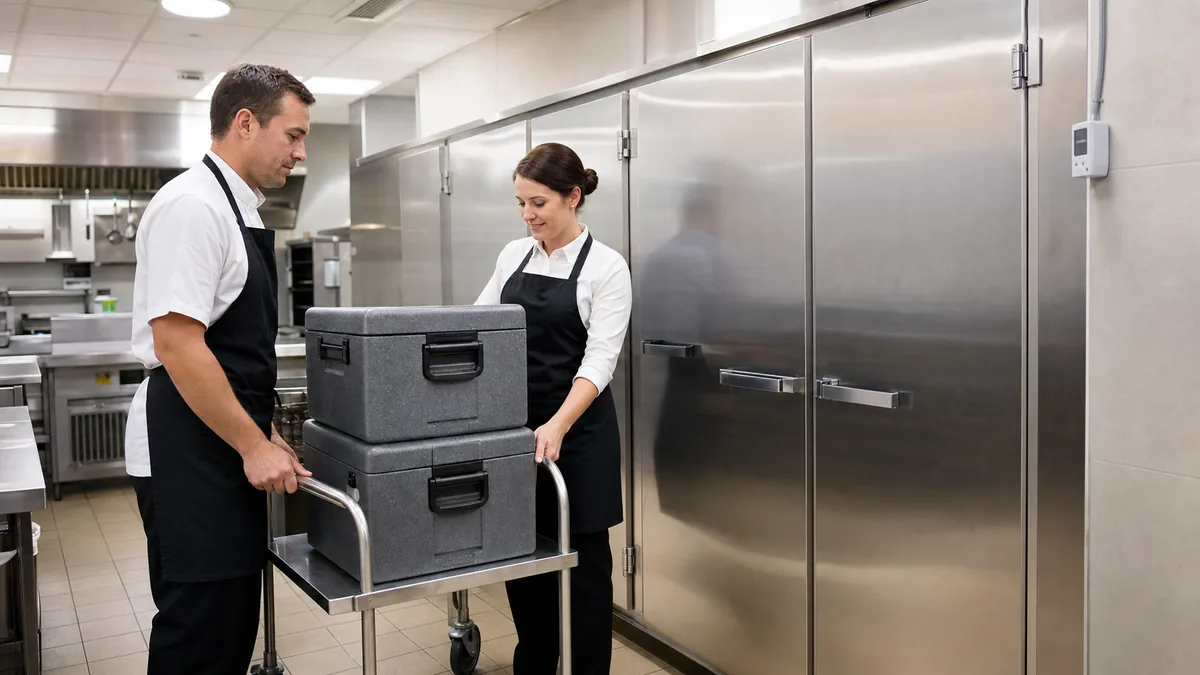
Keep discarded, transferred, retained, and unassessed food physically and logistically separate. Record who authorized the disposition.
Account for employees after a closure or restart
Record when employees stopped normal work, who stayed for safe shutdown, who performed cleanup or receiving, and when each person actually left. A closure announcement does not end paid work if employees continue assigned duties. Provincial reporting-pay, minimum-pay, overtime, or emergency provisions may need professional review.
When service resumes, do not reuse the original schedule as proof of actual attendance. Add the approved restart coverage and preserve the extra prep or receiving time for the payroll handoff.
Run a short drill before storm season
A useful drill does not move real food or simulate a safety decision. Ask the opening manager to locate the emergency contacts, identify which menu groups depend on each unit, find the calibrated monitoring equipment, and show where the incident log begins. Ask the floor lead to demonstrate how an item is removed from every ordering channel.
Time the handoff and record only the gaps. If the after-hours technician number is stale, the alarm cannot be read without opening a door, or no one owns delivery-platform changes, repair those items before the next outage. Repeat the drill when equipment, managers, or ordering systems change.
Restart only after the unit and workflow are ready
Confirm power stability, equipment performance, cleaning needs, safe receiving or restocking, and the next temperature check. Reopening the door is not the same as restoring safe operation.
Review the failure after service: alarm visibility, after-hours contacts, generator or backup procedure, thermometer calibration, insurance evidence, supplier options, and which menu items depend on each unit.
Rebuild coverage after safety decisions
Once the responsible person sets the operating plan, use Maxuod Shift to add cleanup, receiving, prep, or reduced-service coverage and preserve actual hours. The scheduler does not assess food safety, control equipment, or replace a public-health direction.
The Restaurant Manager Incident Handbook keeps the safety, guest, staffing, and payroll handoffs separate so a rushed shift change does not erase the evidence.
FAQ
Should staff open a freezer during a power outage to check the food?
Keep doors closed as much as possible. Follow a controlled monitoring plan and the official guidance for the province and establishment.
Can smell or appearance prove refrigerated food is safe?
No. Use reliable time-and-temperature evidence and local food-safety guidance. Contact the responsible authority when the facts are uncertain.
Can Maxuod Shift decide whether food should be discarded?
No. Maxuod Shift helps rebuild staffing and record actual hours after the safety decision. It is not a food-safety system.
Official sources checked
Reviewed July 19, 2026
Written as an operator checklist, not legal or payroll advice. Confirm local rules before changing pay, holiday, or tip policies.
Related guides
Restaurant Opening Checklist: Free PDF Template
Use this restaurant opening checklist to assign FOH, kitchen, staffing, equipment, and sign-off tasks. Download the free printable PDF template.
Restaurant Shift Handoff Checklist: Pass the Exceptions
A restaurant shift handoff checklist for exceptions, owners, deadlines, actual-hour changes, and close-to-open decisions without a chat dump.
Restaurant Labour Forecasting for Small Businesses
Build a restaurant labour forecast from demand signals, role-hours, base and flex coverage, then compare planned and actual hours with a worked example.
Build the schedule before the week gets loud
Maxuod Shift keeps employee availability, overtime risk, payroll estimates, and tip distribution in the same place for small restaurant teams.