
By Deeyoung MaLinkedInWebsiteSeptember 8, 20267 min readRestaurant OperationsReviewed October 17, 2026
A Customer Finds Hair or Another Foreign Object in Food. What Now?
A manager’s response to hair or another object in restaurant food: apologise, check for harm, withdraw the dish, offer a remedy and follow up honestly.
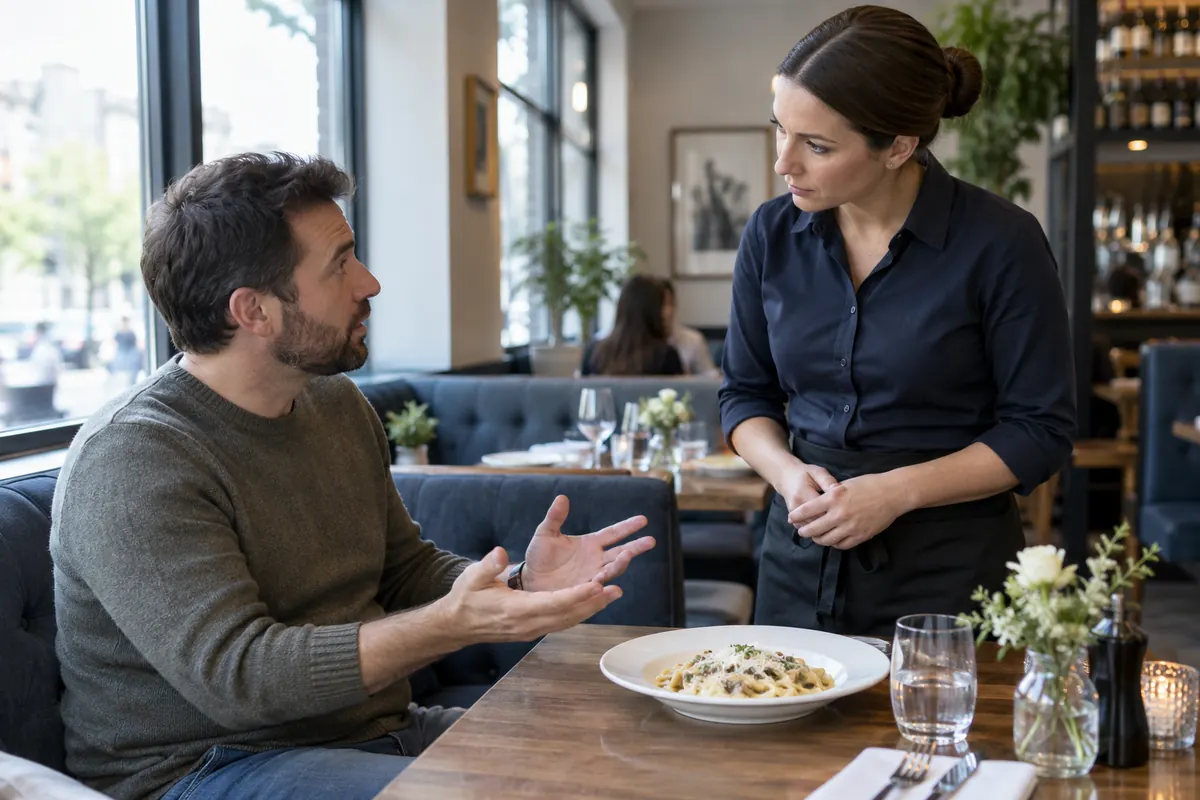
When a guest finds hair, plastic or another foreign object in restaurant food, the manager should come to the table. Apologise, ask whether anyone has been hurt, withdraw the whole dish and explain the available remedies. Do not leave the server carrying messages between an upset guest and the kitchen.
The guest needs to know who is taking responsibility, what will happen to the meal and what the restaurant will do next. A sincere response matters more than a long explanation of how unusual the problem is.
Apologise before debating where the object came from
Let the guest finish describing what happened. You can apologise for the experience without pretending the cause has already been established. Do not suggest that the hair must be theirs, and do not question employees about blame in front of the table.
“I’m really sorry this happened. Has anyone been hurt or felt unwell? Please leave that dish for now. I’ll take care of this with you.”
If the guest reports an injury, swallowing something sharp or feeling unwell, help them seek medical attention. For an emergency such as difficulty breathing, contact emergency services immediately. A replacement meal or voucher is not the response to an urgent health concern. CFIA advises seeking medical attention when food may have made someone ill.
Withdraw the whole dish, then offer a choice
Do not remove the object and return the same plate. Withdraw the entire affected dish from service. But do not immediately scrape it into the bin either: preserve useful photographs, the object and the related food, identify the dish and time, and keep them separate from food being served. Follow the appropriate local authority’s directions on preservation and disposal; do not discard an item the guest wishes to retain without discussing it.
Ask what the guest would prefer rather than assuming they want the same meal again:
- Offer a freshly prepared replacement or a different dish if they still want to eat, with an honest estimate of the wait.
- If they no longer want the dish, offer to cancel it or refund its price if already paid.
- If the experience has affected the whole table, bring in a manager with authority to agree a further response.
These are recommended service-recovery options, not a uniform Canadian legal compensation entitlement. Agree the restaurant’s approval limits in advance so the guest does not have to repeat the complaint to three people.
A remake is appropriate only after the relevant ingredients, tools and equipment have been checked for unresolved concerns. Do not take a fresh portion from the same suspect batch simply to shorten the wait.
Make a voucher an extra, not the solution
A voucher or another goodwill gesture can accompany a refund or replacement, if the guest wants it. Deal with today’s meal first. A discount that requires another visit does not resolve the meal sitting in front of them.
Explain any voucher conditions. Do not make compensation conditional on deleting a review, withdrawing a complaint, keeping quiet or giving up medical attention. Whether the guest returns is their choice.
Avoid promising that this can “never happen again.” Promise work you can actually carry out: the kitchen will investigate the relevant ingredients and preparation, and a named manager will follow up.
“We’ll remove the whole dish, not just the object. I’ll ask the kitchen to check the ingredients and preparation, and I’ll handle the follow-up. Would you prefer a new dish, something different, or a refund for this one?”
Before the guest leaves, return to the table. Check whether the replacement is satisfactory, the bill is correct and anything else needs attention. Removing the plate should not be the last contact.
Sharp objects need more than a replacement meal
A hair complaint and a piece of glass, metal or hard plastic should not receive an identical response. With a sharp or hard object, pause service of potentially affected food or from the affected workstation before the investigation proceeds. Retain the object and have the responsible person check the ingredients, packaging and equipment. Do not remake from an unresolved batch.
If someone is injured, the problem recurs or the affected scope cannot be established, contact the applicable food-safety authority for direction. Finding no more visible fragments does not establish that the remaining food is safe. Refunding the meal does not close the safety question.
Canadian reporting routes depend on the issue and location. Restaurant hygiene, handling and related illness complaints generally go to provincial, territorial or municipal authorities; CFIA provides routing for product complaints, including foreign objects. In Québec, MAPAQ accepts food complaints through its provincial channel. Use the CFIA complaint guide and, where applicable, Québec’s food-complaint service.
Keep the public reply short and truthful
If the guest has posted a review, acknowledge the experience and identify who will follow up. Do not publish order details, phone numbers or health information, or contradict the guest with an unverified explanation.
When the cause is still unknown, adapt this suggested reply to what has actually happened:
“We’re sorry about your experience. Our manager would like to understand what happened and help resolve the meal and follow-up. Please contact the restaurant directly so we can identify the order. We’ll explain our findings once we have checked them.”
If a refund, replacement or investigation has already taken place, describe that accurately. Do not announce a complete fix before one exists. A public response is not a substitute for handling the complaint, and it cannot guarantee a changed review.
Finish the investigation after service, not the conversation
You do not need an elaborate new reporting system. At minimum, record the dish, what was found, any reported injury or discomfort, the action taken and who will investigate further. Keep personal and health details in the restaurant’s appropriate restricted record.
Make the check specific: head coverings and contact points for hair; packaging, containers and tools for plastic; damaged items and potentially affected food for glass or metal. If the cause is not established, record it as unresolved rather than naming an employee to close the matter.
If the shift changes before the investigation is finished, hand over the ingredients still withheld from use, the open questions and the responsible manager. The restaurant shift-handoff checklist helps organise that handover. Managers using Maxuod Shift can consult the roster to identify who was scheduled; the schedule does not prove who caused the problem. Complaint records, refunds and the food-safety investigation belong in the restaurant’s separate processes, not in the scheduling tool.
Assign the promised follow-up to a named person and contact the guest as agreed. For other service problems, keep the restaurant manager incident handbook available to the next shift.
This article offers restaurant operating suggestions, not medical, legal or professional food-safety advice. Compensation, reporting, preservation and disposal depend on the circumstances and applicable local direction. Injury or serious symptoms take priority over service recovery.
Official sources checked
Reviewed October 17, 2026
- CFIA — Where to report a food complaint or concernCanada: issue-specific complaint routing, not a compensation schedule
- Québec — Plainte pour insalubrité ou intoxication alimentaireQuébec only: MAPAQ food complaints
- Nova Scotia — Make a food safety complaintNova Scotia only: unsafe food handling and illness complaints
Written as an operator checklist, not legal or payroll advice. Confirm local rules before changing pay, holiday, or tip policies.
Related guides
Restaurant Shift Handoff Checklist: Pass the Exceptions
A restaurant shift handoff checklist for exceptions, owners, deadlines, actual-hour changes, and close-to-open decisions without a chat dump.
Restaurant Ran Out of a Menu Item During Service: A 15-Minute Response
Use a practical 15-minute restaurant sold-out-item response to stop new orders, brief staff, offer substitutes, record waste, and reset tomorrow’s prep.
Restaurant Freezer Power Outage: Protect Food Before You Rebuild the Shift
Use a restaurant outage checklist to keep doors closed, log time and temperature, isolate affected food, contact the right authority, and rebuild coverage.
Build the schedule before the week gets loud
Maxuod Shift keeps employee availability, overtime risk, payroll estimates, and tip distribution in the same place for small restaurant teams.