
By Deeyoung MaLinkedInWebsiteJune 1, 202611 min readScheduling OperationsReviewed August 23, 2026
How to Handle Employee No-Shows in a Restaurant
Use a restaurant employee no-show policy to verify the published shift, reconstruct the timeline, cover the role, and review facts after service.

Key takeaways
- Treat the absence as unconfirmed until the manager checks the published schedule, approved changes, location, role, and normal attendance channel.
- Protect service and reconstruct the timeline in parallel; coverage does not prove why the employee is missing.
- Keep observed facts, private employee context, the approved schedule change, and actual hours in separate records.
- Do not label an incident job abandonment or apply automatic discipline from an operations checklist; use the restaurant's qualified employment process.
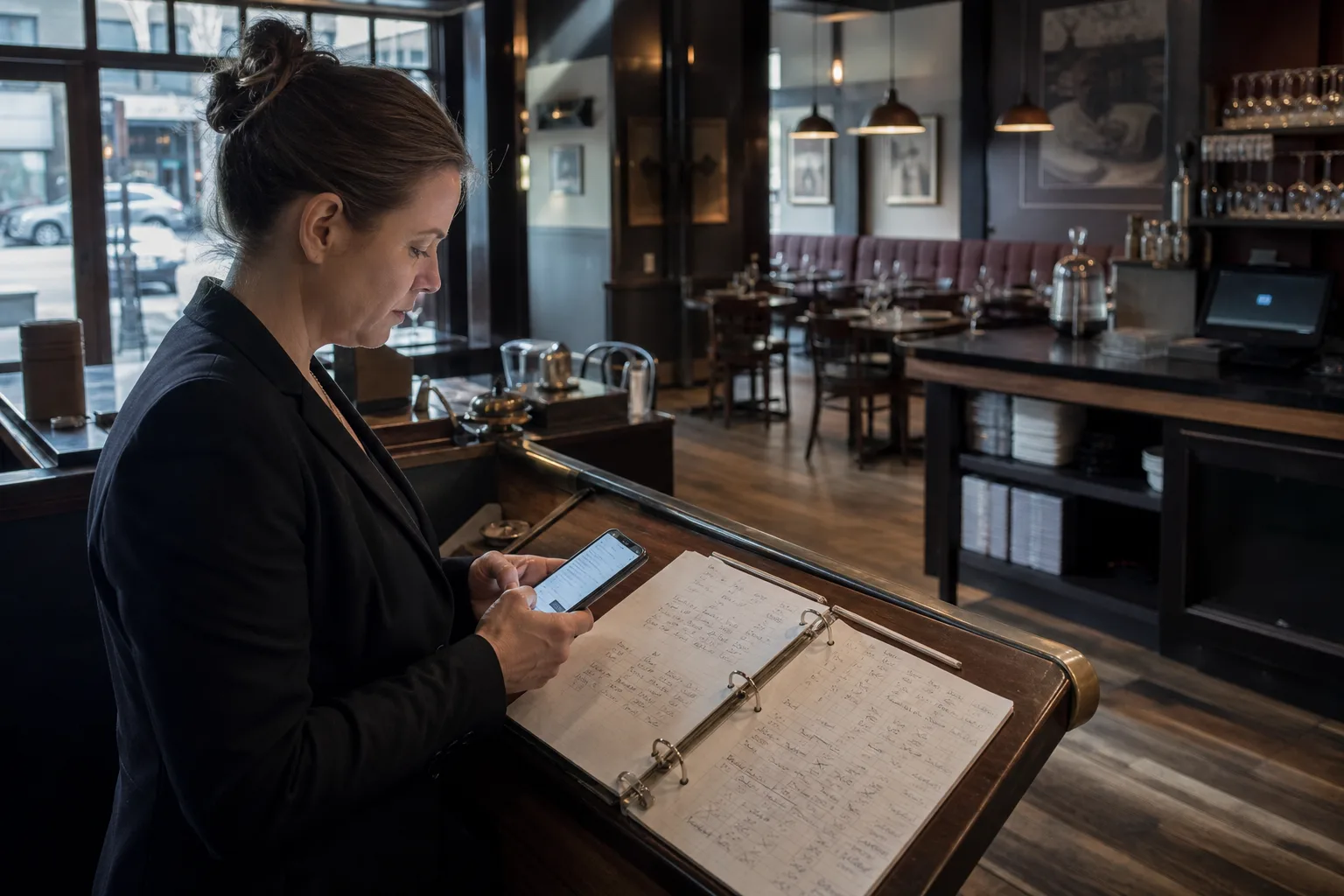
At 5:07 p.m., the dinner manager sees that the 5:00 server has not arrived. The server section is empty, but the cause is still unknown. Before calling it a no-show, the manager needs to answer a more basic question: what version of the schedule was the employee expected to follow?
A useful restaurant employee no-show policy separates two jobs. The floor lead protects the shift. A manager preserves the schedule, approved changes, contact attempts, response, and coverage decision so the incident can be reviewed after service. Neither job requires a public accusation or a conclusion about quitting.
This is an operating and evidence workflow, not legal or HR advice. Protected leave, disability, emergency, discipline, job abandonment, termination, privacy, and documentation requirements depend on the facts and the province where the employee works.
Start with a tentative status, not a verdict
Mark the employee as missing or unconfirmed while the check is underway. Confirm the date, location, role, start time, publication time, and latest approved schedule version. Search the approved swap and time-off channels, not every informal chat the team has ever used.
Then call the employee through the normal attendance contact and send one written message. Record the exact time and channel. The message can be direct: the published shift began at 5:00, the manager has not seen the employee, and the employee should contact the manager. It does not need a threat or a public audience.
At the same time, name the operating gap: six-table server section, cash drawer, closing key, prep station, dish recovery, or bar lead. The coverage response can begin without claiming to know why the employee is absent.
Reconstruct the timeline before memory replaces evidence
Create a short timeline from records already available: when the schedule was published, whether it changed, when the employee was notified through the normal process, whether a swap or time-off request existed, when the shift began, when the manager noticed the gap, each contact attempt, any response, and the time coverage changed.
Keep direct observations separate from interpretation. Employee absent at 5:07 is an observed fact. Employee decided to quit is an interpretation. Coworker says they mentioned a family issue is unverified context that belongs in a restricted follow-up, not the team schedule.
The record should be understandable to a manager who was not present. A screenshot without the version, a reaction emoji, or a note that says only 'NCNS' cannot show whether the schedule changed or whether an approved request was missed.
Five causes can look identical at 5:07
A manager-side schedule error, an approved swap that was not recorded, a call-out delivered through the wrong channel, an emergency that prevented contact, and an unexplained absence all produce the same empty station. They do not produce the same follow-up.
If the wrong version was published or the location changed without a reliable notice path, correct the schedule process. If two employees agreed to trade but no manager approved it, apply the shift-swap policy to both the coverage and record gap. If the employee reported the absence before the shift, route it to the call-out workflow rather than relabelling it after the rush.
If the employee later reports an emergency, illness, disability-related issue, safety concern, or protected reason, move the details to the qualified private process. The operations log can keep the time and effect without becoming a medical or disciplinary file.
Cover the responsibility without erasing the absence
Move a qualified scheduled employee only after naming the new gap that move creates. Offer a backup a precise block rather than asking who can 'help tonight.' If nobody can cover the full station, the manager can reduce a section, delay a menu item, divide a close, or take the role personally if qualified.
The replacement must fit the responsibility: key access, age or service restriction, training, station competence, response time, and weekly-hour context. An available person is not automatically a qualified closer or safe equipment operator.
Record the vacant role, offers, accepted coverage, manager approval, revised schedule version, and remaining service change. Do not overwrite the original published shift. The record needs to show both what the employee was expected to work and what the restaurant did when they did not arrive.
Write a policy that defines the channel and the review
The policy should say which published schedule controls, how changes are approved, who receives an absence report, which channel counts, what an employee should do when that channel is unavailable, when the manager attempts contact, and where a factual review happens after service.
A plain operating clause is safer than a dramatic promise: Employees should contact the manager on duty through the approved attendance channel as soon as they know they cannot attend. A coworker-arranged change is not final until a manager confirms the revised schedule. If an employee is absent without accepted notice, the manager will verify the schedule, attempt contact, protect coverage, and review the facts before deciding the next step.
Do not copy an automatic warning ladder, job-abandonment deadline, proof requirement, or termination promise from a generic template. Have the policy reviewed for the provinces, agreements, protected grounds, privacy rules, and actual process that apply to the business.
Review the pattern after the individual facts
After the shift, confirm whether the incident was a schedule error, approved change, reported call-out, emergency, or unexplained absence. Then inspect the operating pattern without using it as proof of motive: late schedule changes, repeated close-open combinations, an unreliable notification channel, stale availability, transportation constraints, or a role with no trained backup.
A pattern can justify a scheduling or process change even when it does not answer the employment question. If the same closing station repeatedly becomes uncovered, train another closer and fix the role map. If employees keep reporting through the wrong person, replace the vague instruction with one reachable attendance contact.
Keep restricted employee details out of group chat, public schedule notes, and payroll exports. The manager who reviews attendance may need more context than the person who publishes the next week.
Keep the published week, revised coverage, and actual time distinct
A saved Maxuod Shift workspace can keep the employee roster, roles, published shifts, planned hours, approved replacement, revised week, and later actual-hour context connected. That makes it easier to reconstruct what the manager knew and what changed without turning the schedule into an HR case file.
Maxuod Shift does not confirm that a message was legally sufficient, decide whether an absence is protected, judge credibility, apply discipline, determine job abandonment, terminate employment, or run payroll. A very small team can use a controlled paper log or spreadsheet; a full HR platform is the better fit when formal attendance cases, accommodations, or automated employee communications need dedicated controls.
Review this workflow whenever the approved contact channel changes, another location opens, managers approve swaps differently, an incident cannot be reconstructed, or employee records start appearing in public schedule notes. The trigger is a broken evidence path, not a promise that the policy is permanently complete.
FAQ
When does a late employee become a restaurant no-show?
Use the definition in the restaurant's written policy, but first verify the correct published shift, location, role, approved swaps, and attendance channel. Record the employee as missing or unconfirmed while contact attempts continue rather than assigning a motive before the facts are known.
Should a manager contact an employee who has not arrived?
Yes, use the approved contact process and preserve the time and channel. A direct call followed by one written message can establish what the manager knew, give the employee a chance to respond, and avoid exposing the situation in a group chat.
Does one no-show mean job abandonment?
Not automatically. Job abandonment, discipline, protected leave, disability, emergency, and termination questions depend on the facts and the applicable employment process. The schedule record should preserve what happened without making the legal or HR conclusion.
What can Maxuod Shift record after a no-show?
A manager can inspect the published week, roles, planned hours, approved replacement, revised schedule, and later actual-hour context. Maxuod Shift does not judge credibility, determine protected leave, apply discipline, or make a job-abandonment decision.
Written as an operator checklist, not legal or payroll advice. Confirm local rules before changing pay, holiday, or tip policies.
Related guides
How to Build a Restaurant Backup Coverage List
Build a restaurant backup coverage list by role, availability, response window, and weekly hours, then use it when an employee calls out.
Shift Swap Policy Template for Small Restaurants
Use a restaurant shift swap policy template with an approval decision tree, worked swap examples, skill and hour checks, and a clean change record.
Employee Availability Form Template for Restaurants
Use a restaurant employee availability form to separate recurring patterns, dated exceptions, cutoffs, versions, and manager approval.
Build the schedule before the week gets loud
Maxuod Shift keeps employee availability, overtime risk, payroll estimates, and tip distribution in the same place for small restaurant teams.