
By Deeyoung MaLinkedInWebsiteMay 9, 20268 min readLabour Standards
Nova Scotia Restaurant Labour Standards
Nova Scotia restaurant labour rules for Halifax operators: overtime, minimum wage, breaks, uniforms, deductions, holidays, and scheduling.
Nova Scotia is less complicated than Ontario or BC from a scheduling perspective. The overtime threshold is higher, the stat holiday list is shorter, and there's no separate tipped minimum wage. But it has its own traps — and if you're coming from another province (or hiring someone who is), the assumptions don't travel.
The final authority is the NS Department of Labour, Skills and Immigration. Treat this as an operator checklist, not legal advice.
The 48-hour overtime threshold — the highest in the country
Overtime in Nova Scotia starts after 48 hours in a week. Hours over 48 are paid at 1.5× the regular rate. No daily threshold — a 12-hour shift can be straight time as long as the weekly total stays under 48.
For a typical Halifax full-service restaurant, five 9-hour shifts land at 45 hours — well under the threshold. That same pattern would trigger overtime in BC (40-hour threshold) or Quebec (also 40). If you're managing operations across provinces or just hired a manager whose last job was in Ontario, this is worth flagging explicitly.
Minimum wage — one rate, no exceptions
Nova Scotia uses a single minimum wage that applies to everyone, including tipped servers and bartenders. There's no separate "server wage" or "tip credit" system.
Practically, this means tipped staff must earn the minimum wage on every regular hour, regardless of tips. Tips are on top of the wage, not a substitute for it. If you're budgeting labour for a server-heavy shift, budget at the full minimum wage. No tip credit math to mess with, but also no discount.
Meal breaks — 30 minutes after 5 hours
Standard rule: 30-minute unpaid meal break after 5 consecutive hours. If the nature of the work requires the employee to stay on duty, the break is paid. In most restaurants, the natural lull between lunch and dinner service is when the break normally happens.
There's no statutory entitlement to additional rest periods — coffee breaks, smoke breaks, etc. Those are entirely at the employer's discretion. Most Halifax operators schedule a 15-minute paid break for shifts over 6 hours, but it's custom, not law.
Uniforms and deductions — the rules are subtle
Nova Scotia allows employers to require uniforms, but the cost allocation isn't simple. Branded uniforms with the restaurant's logo or a custom apron — those are typically the employer's responsibility under the Labour Standards Code. Generic items like black pants and non-slip shoes can be required at the employee's expense.
Pay deductions are only legal if the employee has authorized them in writing in advance, or if they're required by statute (CPP, EI, tax withholding, court orders). Deducting for walk-outs, broken dishes, register shortages, or uniform damage is not allowed without explicit signed authorization.
Practical advice from Halifax operators I've talked to: most just absorb breakage and walk-outs into operating costs. The legal risk of an improperly documented deduction isn't worth the few dollars.
Statutory holidays — the list is short
Nova Scotia recognizes six statutory holidays: New Year's Day, Heritage Day (third Monday in February — equivalent to Family Day in other provinces), Good Friday, Canada Day, Labour Day, Christmas Day.
Notable absences: Victoria Day, the August Civic Holiday (even though Halifax observes Natal Day), Thanksgiving, Remembrance Day, Boxing Day.
Here's the one that trips up Halifax operators every single year: the August long weekend (Natal Day in HRM) is a huge restaurant weekend. Waterfront patios are packed. But it is not a statutory holiday under provincial law. Operators who treat it as stat-pay-eligible for the whole staff are giving away the equivalent of a paid stat day with no legal obligation. If you want to give it as a bonus, fine — just don't assume the law requires it.
No special youth or student rates
Nova Scotia doesn't have a separate minimum wage for students or workers under 18. A 16-year-old dishwasher gets the same minimum as a 45-year-old server. That's more generous to young workers than some other provinces — Alberta, for example, has a specific $13/hr youth rate for under-18s.
For operators, the simplicity is a small win. No special calculations for high school staff working summer hours.
The Halifax dining reality
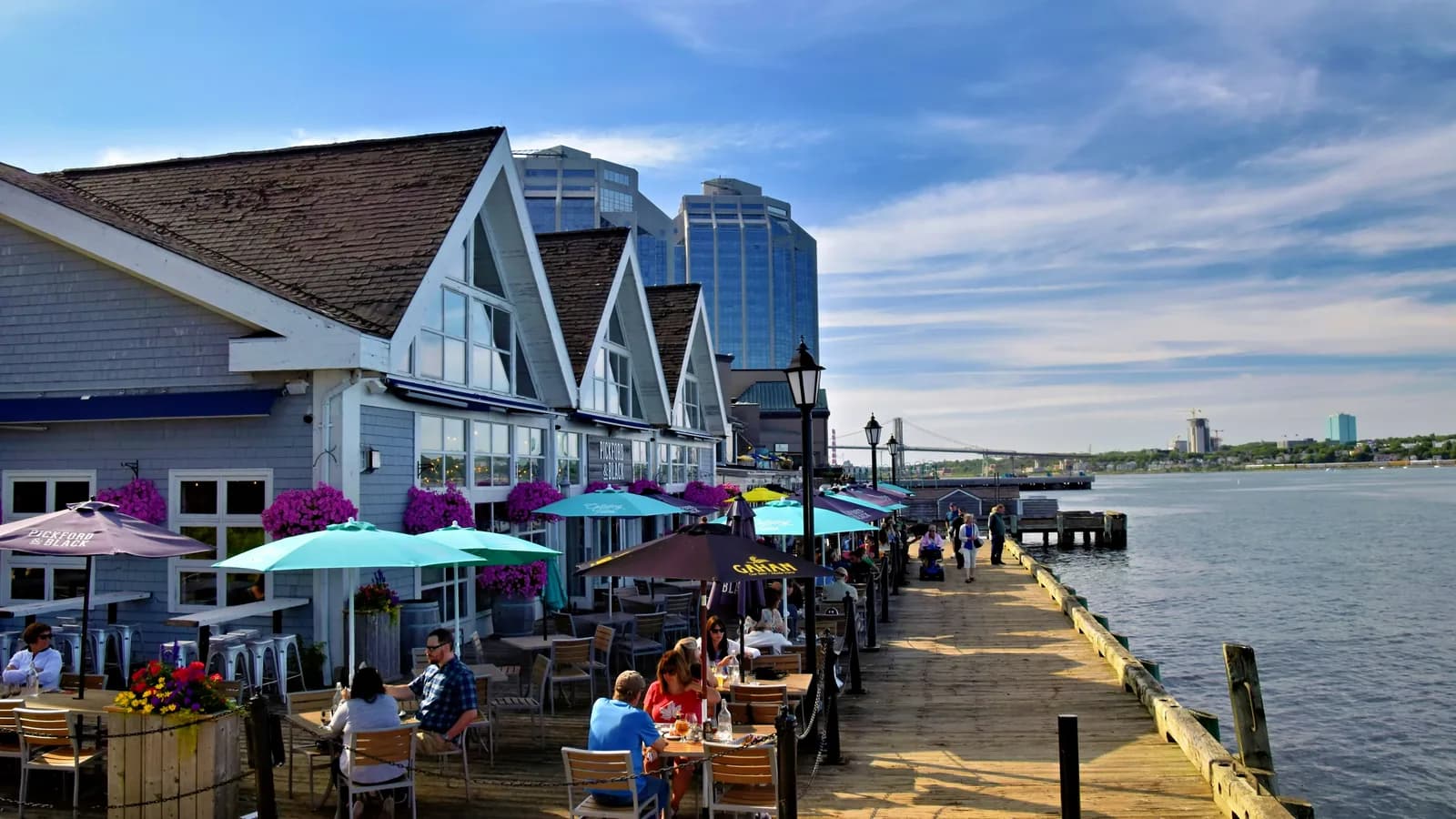
Halifax runs on independent rooms — small dining rooms, brewery kitchens, neighbourhood cafes, seasonal waterfront spots. The Labour Standards Code applies the same way everywhere, but small teams cross-train more and managers often work the floor.
The seasonal swing deserves attention. Summer can double covers for waterfront restaurants. March can expose every overstaffed habit you have. Building that swing into the labour forecast instead of treating the same weekly schedule as normal all year is how you avoid the winter labour cost crunch.
Putting it together
Nova Scotia is easier to schedule in than Ontario or BC. But the traps are different: the August long weekend question, a single minimum wage with no tip credit, and deduction rules that require written authorization. Build those assumptions into your schedule and payroll setup once, and you're in good shape for most of the year.
For a broader operating view, connect this with the Nova Scotia restaurant scheduling rules, restaurant shift management in Canada, the overtime calculator, and the restaurant labour cost percentage guide.
FAQ
When does overtime start for restaurant staff in Nova Scotia?
The general Nova Scotia overtime threshold is 48 hours in a week. Restaurants should still verify the current Labour Standards guidance and any role-specific exceptions before changing payroll policy.
Does Nova Scotia have a separate tipped minimum wage?
No. Nova Scotia uses one minimum wage for tipped and non-tipped employees. Tips are added on top of wages; they do not replace the minimum wage obligation.
What should Halifax restaurant managers check before publishing a schedule?
Check the 48-hour weekly overtime threshold, 30-minute meal breaks after long shifts, statutory holiday weeks, youth rules, uniform deductions, and whether any last-minute shift changes need a clear record.
Written as an operator checklist, not legal or payroll advice. Confirm local rules before changing pay, holiday, or tip policies.
Related guides
Nova Scotia Restaurant Scheduling Rules
A practical Nova Scotia restaurant scheduling guide: 48-hour overtime, breaks after 5 hours, holiday pay, call-ins, and records.
Restaurant Labour Cost Percentage in Canada: 2026 Cost Review
Calculate restaurant labour cost percentage, compare scheduled and actual inputs, and diagnose sales, coverage, overtime, or employer-cost changes.
Stat Holiday Pay for Restaurant Staff
Restaurant stat holiday pay guide: eligibility, premium pay math, substitute days, and province-specific payroll traps in Canada.
Build the schedule before the week gets loud
Maxuod Shift keeps employee availability, overtime risk, payroll estimates, and tip distribution in the same place for small restaurant teams.